
3D PRINTING
Introduction
3D objects are created through the additive process where the printer places multiple layers of material until the object is created. The entire purpose is to create items with a small amount of material used and lower costs. Most products nowadays are mass produced and made cheaper due to techniques such as injection moulding. 3D printing enables the ability for people to become creative and create new products whilst also manufacturing cheap prototypes. (6. History of 3D Printing, 2020) The 3D printing industry is always evolving, and sooner or later will begin to transform almost every major industry and change our way of living. 3D printing is an upcoming disruptive technology which will and is turning the manufacturing industry upside down.
History
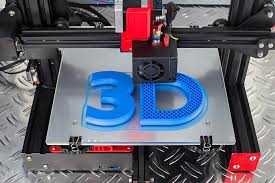
From the beginning of 3D printing, Japanese inventor Hideo Kodama made the first major breakthrough in the industry through his product which used ultraviolet lights to harden polymers and create solid objects in 1981. (4. History of 3D Printing, 2020) A couple years later, in 1983, Chuck Hull invented Stereolithography. Stereolithography is the process of making solid objects by repeatedly printing thin layers of the ultraviolet curable material one on top of the other. (3. Chuck Hull Invents Stereolithography or 3D Printing and Produces the First Commercial 3D Printer : History of Information, 2020)
It was not until 1999 where the first 3D printed organ was implanted into a human. Scientists at Wake Forest Institute for Regenerative Medicine printed a human bladder covered in the cells of the patient and was implanted. (6. History of 3D Printing: It’s Older Than You Think [Updated], 2020) Fast forward to current day times, and 3D printing is easier than ever. Prices of 3D printers have fallen drastically and it is even being found in multiple industries such as jewellery, aircraft and even the housing industry.
Techniques
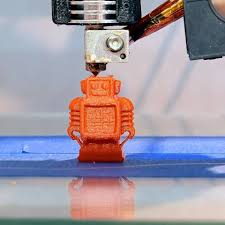
There are multiple techniques that allow a 3D printer to operate. All these technologies are additive but the difference between them all is how the object is built and layered. The most common technique is Stereolithography which was talked about previously. Digital Light Processing is a method that uses light and photosensitive polymers. This technique is similar to Stereolithography however the key difference is the light source, with DLP using traditional light sources via arc lamps. This technology was first created by Larry Hornbeck of Texas Instruments in 1987.
Another technique is Binder Jetting. Binder Jetting is achieved by using a powder base material and a liquid binder. The powder is dispersed in layers whilst the liquid binder is applied and glue the particles together to create the object. This technology was developed in 1993 at the Massachusetts Institute of Technology. Lastly, another technique includes the use of high powered lasers called Selective Laser Sintering. These lasers combine the particles of plastic or ceramic into a 3D shape by selectively fusing these powdered materials through scanning the layers generated by the modelling program. (8. What is 3D printing? How does a 3D printer work? Learn 3D printing, 2020)
Impact Of 3D Printing
There is no doubt that the 3D printing industry has benefited the manufacturing industry and society in general, the fact that 3D printers are quite fairly priced and there is much to gain from acquiring them would show that there is not much to lose from investing in one. However, the impact of these printers on the global supply chain is still yet to be seen. These printers have the ability to replace current manufacturing technologies, especially with their ability to be resource and cost efficient. During manufacturing the printers produce less waste than current technologies therefore are more environmentally friendly, whilst also reducing overproduction. The biggest key to 3D printers is their ability to tailor to individual customer needs and the involvement of the customers in design and production. The ability for these printers to produce on demand could potentially create a decrease in the demand for global transportation of goods. (5. Mohr and Khan, 2015)
References:
- Chia, H. and Wu, B., 2015. Recent advances in 3D printing of biomaterials. Journal of Biological Engineering, 4.
- Dawson, F., 2020. How Disruptive Is 3D Printing Really?. [online] Forbes. Available at: <https://www.forbes.com/sites/freddiedawson/2014/09/30/how-disruptive-is-3d-printing-really/#669988f44e44> [Accessed 8 May 2020].
- Historyofinformation.com. 2020. Chuck Hull Invents Stereolithography Or 3D Printing And Produces The First Commercial 3D Printer : History Of Information. [online] Available at: <http://www.historyofinformation.com/detail.php?id=3864> [Accessed 8 May 2020].
- Me3D. 2020. History Of 3D Printing. [online] Available at: <https://me3d.com.au/2018/history-of-3d-printing/> [Accessed 8 May 2020].
- Mohr, S. and Khan, O., 2015. Technology Innovation Management Review. 5(11), pp.20-25.
- Redshift EN. 2020. History Of 3D Printing: It’s Older Than You Think [Updated]. [online] Available at: <https://www.autodesk.com/redshift/history-of-3d-printing/> [Accessed 8 May 2020].
- Ventola, C., 2014. Medical Applicaions for 3D Printing: Current and Projected Uses. 39(10), pp.704-711.
- 3D Printing. 2020. What Is 3D Printing? How Does A 3D Printer Work? Learn 3D Printing. [online] Available at: <https://3dprinting.com/what-is-3d-printing/#Services> [Accessed 8 May 2020].
By Angus Bava